Delmenhorst (near Bremen), Germany.
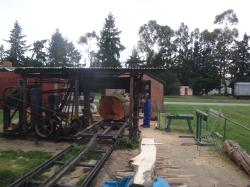
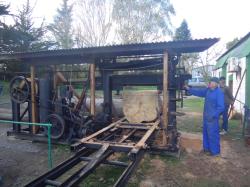
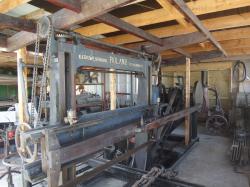
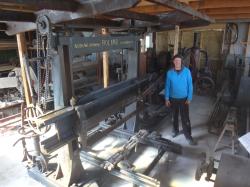
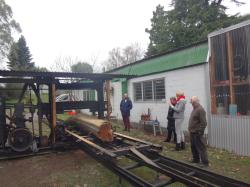
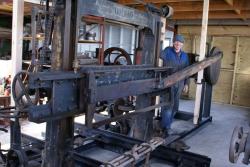
A horizontal reciprocating single blade mill with rack and pinion drive to the log carriage, and originally steam powered; the boiler fired by wood offcuts.
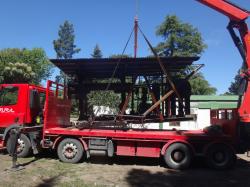
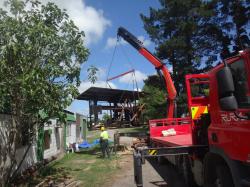
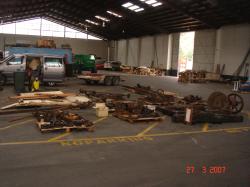
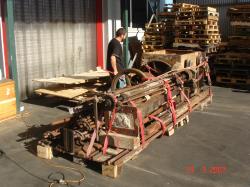
Owned from new by the Hoberg family (whom I’ve known for many years through kite flying) at Nordleda, a village near the mouth of the Elbe River, it was in excellent original condition when brought to New Zealand in 2007. Very little restoration was required and re-assembly was completed during 2014/2015.
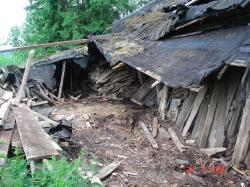
At the Hoberg’s farm/woodlot it was permanently housed in a basic tar-paper roof building and had the flywheel/crank mounted on a 2 tonne concrete block to minimise vibrations.
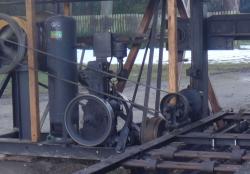
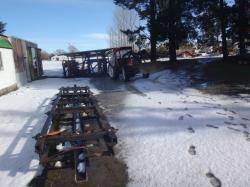
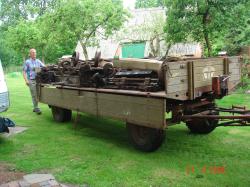
Now on a transportable base with its own 6hp diesel so that it can be taken to shows and heritage events, it can also be run by a traction engine, steam portable or tractor.
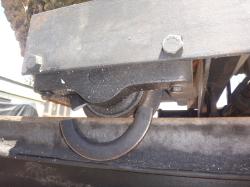
Interesting features are that the saw frame sliders are wooden, running in “V” shaped cast iron guides set so as to impart a curving motion to the blade for better sawdust clearance.
I became aware of horizontal reciprocating mills while making and operating portable sawmills during the late 70’s and early ‘80’s but have not yet found any verifiable accounts of this style being used in New Zealand. Nor, so far, have I been able to pinpoint exactly when and where they first appeared, but best guess is Europe around the middle 19th century- after the production and machining of cast iron became well established.
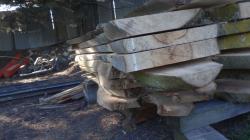
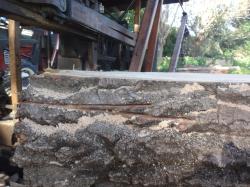
The advantage that horizontal mills have over verticals is that once a log has been dogged to the carriage, it stays attached until it’s been sawn into flitches of whatever thicknesses are required. Cutting these flitches to width is now usually done on a separate smaller saw (usually circular) but was originally accomplished by stacking flitches vertically on the main carriage and repeating the main operation.
There are quite a few horizontals still in use in Europe (usually now in heritage applications), some in England and the US and one or two in Australia. They were usually set up in or beside a forest and were small local operations, often just one person and frequently seasonal. Although very slow (circular saws cut >100 times faster), they don’t require much power (typically <4kw) and produce high quality timber. Re-sawing, cutting to length, stacking, boiler stoking and maintenance kept the operator busy while waiting for each slab to be cut.
Eventually this one is to be based at “The Plains Heritage Park” as a working exhibit for the Ashburton Woodworkers.
PETER LYNN, ASHBURTON NEW ZEALAND, SEPTEMBER ’15.