
Peter Lynn ARCHIVE
Without concessions to aesthetics, designed solely for; flying angle, maximum lift in light winds, reliability, minimal weight, and most of all, wind range (especially light end).
Single skin kites are typically one third the weight for the same area ram air inflated kites and generate around twice the lift from this area, especially at the lower wind end where their typically cambered air foil form has greatest effect. They therefore have potential to fly in lighter winds with more lift- exactly what is required to improve Pilot performance at kite festivals where, surprisingly often, kite trains are draped across the ground rather than up where they should be because of inadequate Pilot kite light wind performance. Ram air Pilot kites are at about their limit of development for light wind flying because of their inherent weight. Only very small gains have been available by using ever lighter fabric in the last 10 years.
From some of the first SSSL kites I made (see Pilot kite section in SSSL Kites) superior light wind flying was possible (including for 1Skins), but their wind range when bridled to float in very light winds was impractical- 8km/hr (fast walking pace) to just 12 km/hr for example- from when the kite had to be pulled down and adjusted for, say, 12km/hr to 20km/hr.
What is required is a kite that will fly the entire range from 8km/hr to say 70km/hr without adjustment.
The first wind range improvement developed was a way to let out the leading-edge bridles (for stronger winds) by a spring system on the main bridles using total kite pull as a proxy for angle of attack. This increased their wind range to something like 15km/hr to 70km/hr without manual adjustment, but the range below 12 km/hr remained unavailable.
Many many ideas for further range extension were tried around this time (2005 to 20210), particularly pulley and lever bridle systems that changed the kite’s angle of attack in response to the shift in centre of lift that occurs at higher flying angles (lower kite angles of attack). None of these has yet established a useful role.
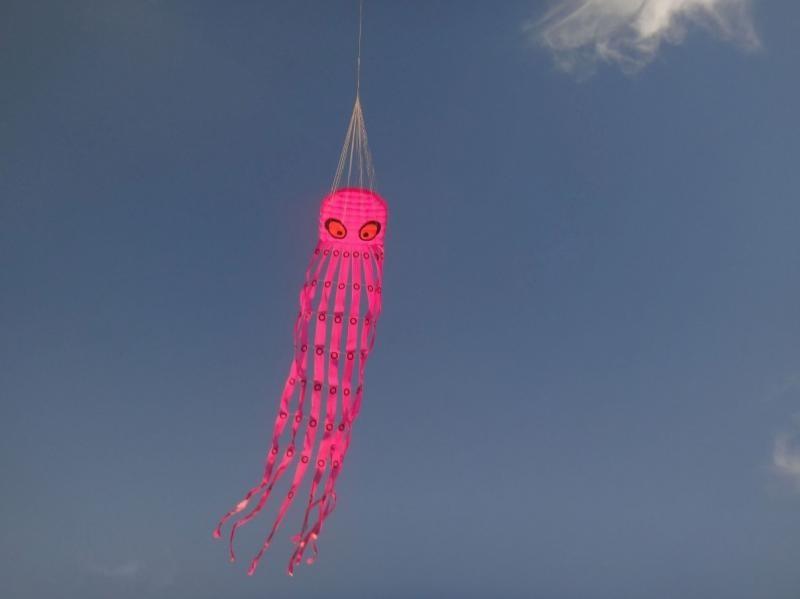
Various styles of rear bridles that increase their drag at rates greater than the square of the windspeed were also tried as ways to increase the kite’s angle of attack at higher flying angles. Some of these were spring loaded flaps but the most successful are ribbon type ‘aeolian’ bridles that vibrate rapidly as wind speed increases to increase their drag appreciably. These are successful on Octopus and Serpent SSSLs for improving maximum wind speed range but are of only limited help at the lower end (by allowing a slightly more forward bridle setting than would otherwise be possible).
Also tried at this stage were unbridled leading edge flaps that inflate downwards to reduce a kite’s angle of attack when pressure captured under the kite is sufficient to do so at higher kite angles of attack but allows the flap to fold back against the underside of the kite’s skin when the kite is flying at lower angle of attack (high flying angle). This seemed like an obvious solution but did not work as expected until late 2025 when it was noticed that they needed to be of very soft light weight fabric or light wind pressure alone was not sufficient to fold them under. The effect is scale sensitive- fabric can be stiffer for larger sized kites.
Since the success of these flaps on the 5sq.m SSSL Rays (2026) the window again opens for developing a dedicated SSSL Pilot kite for event flying.
As will be seen from the Pilots section in SSSL development, various layouts ore possible, with many using keels instead of multiple bridles for simplification.
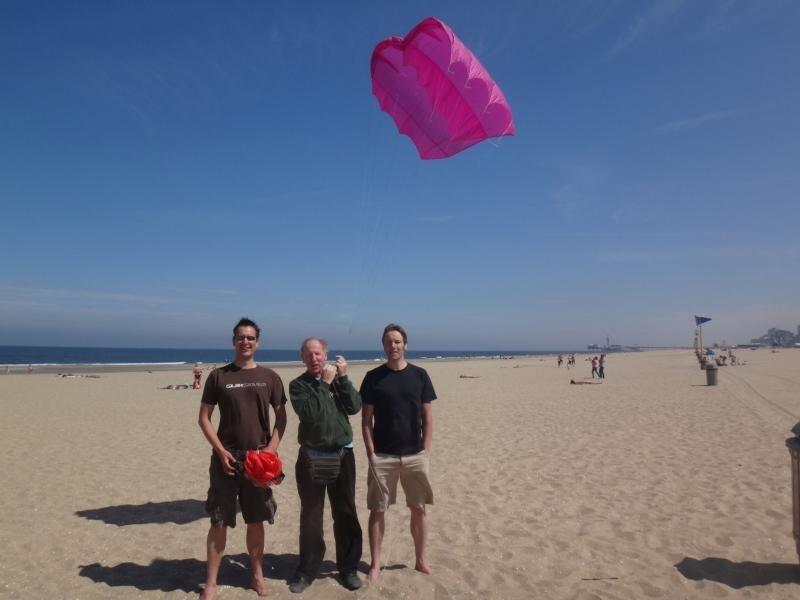
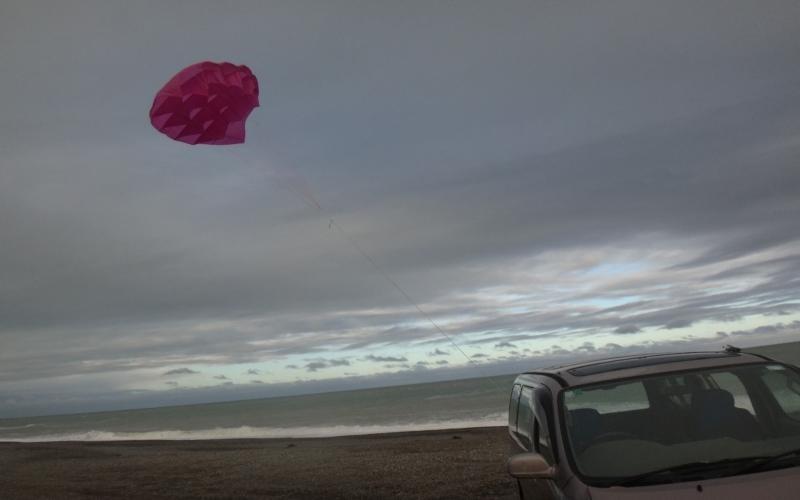
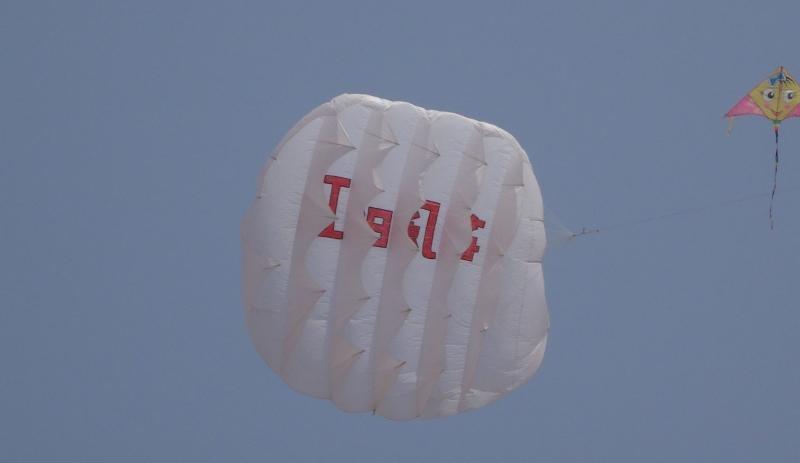
With the advent of successful leading-edge flaps to extend the lower wind range, the use of multiple spanwise cells become problematic because of potential asymmetric collapse (when the flap in one cell folds under while adjacent ones don’t). This type of collapse caused 1Skins to randomly “dive over” and crash at infrequent intervals but made them unusable as main pilot kites at events.
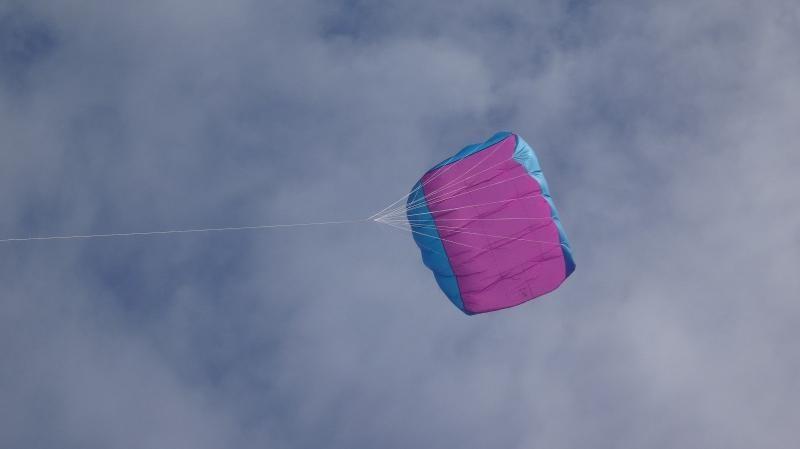
Therefore, a full span leading edge which can use a single leading-edge flap is the likely layout for a successful SSSL Pilot kite. It will also have an automatic bungy bridle a adjuster for strong wind flying and likely either provision for rear weighting to aid recovery in very light winds or some sort of low angle of attack drag device to prevent the kite overflying and aid recover in very light winds.
A possible path to such a kite may be to cut down an SSSL Octopus by removing the tentacles, and narrowing the head, making the sides parallel (an aspect ration of around 0.7 rather than 1.0 to keep the bridled centre section flowing flat in the absence of tentacle drag). These sides could be increased in depth for stability, disposing their area around the kite’s centre of lift as a start point. A leading edge flap modelled initially off the 5sq.m SSSL Ray should extend the wind range down a lot and a bungy auto bridle adjuster should provide top end collapse resistance. Maybe some wind speed senstive drag device will be required to prevent light wind over flying. A question I can’t anser without prototyping s whether the leading edge should be curved (as for the Octopus or fairly straight as per the above. This is because there will be a challenge melding the leading edg flap into the sides – loose or a hinge?
Peter Lynn, January 18th 2026